Understanding Periodic Table and Properties Periodicity
Periodic Table and Properties Periodicity Explained Simply
🔍 What is Periodic Table and Properties Periodicity?
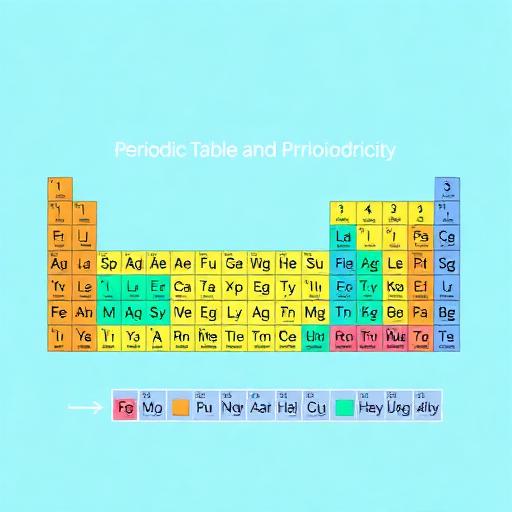
The Periodic Table is a chart that organizes all known elements based on their atomic number and chemical properties. Properties periodicity refers to the recurring trends in properties like atomic radius, electronegativity, and ionization energy.
⚙️ How Periodic Table and Properties Periodicity Works
Elements are arranged in rows (periods) and columns (groups) on the Periodic Table. As you move across a period or down a group, properties of elements change in a predictable manner, showing periodic trends.
🌍 Why Periodic Table and Properties Periodicity Matters
Understanding the Periodic Table and properties periodicity helps scientists predict the behavior of elements, create new materials, and explain chemical reactions. It forms the basis of modern chemistry.
🧠 Real-World Example
An example is the trend of atomic size decreasing across a period from left to right due to increasing nuclear charge, which attracts electrons more strongly.
💡 Fun Fact or Analogy
The Periodic Table is like a giant puzzle where elements fit into specific places based on their properties, creating a beautiful and organized system.
🤔 What You Might Want to Learn Next
1. How do electron configurations relate to properties periodicity? 2. What are the exceptions to periodic trends? 3. How is the Periodic Table used in everyday life? 4. How do scientists predict the properties of undiscovered elements? 5. What is the history behind the development of the Periodic Table?
Frequently Asked Questions
The Periodic Table organizes elements based on properties, and properties periodicity refers to recurring trends in these properties.
Elements are arranged in a table, showing predictable trends in properties across periods and groups.
It helps predict element behavior, create new materials, and explain chemical reactions.
Atomic size decreasing across a period due to increasing nuclear charge.
It's like solving a giant puzzle of elements with specific properties.