Is Venezuela Really Prepared for Major Earthquakes?
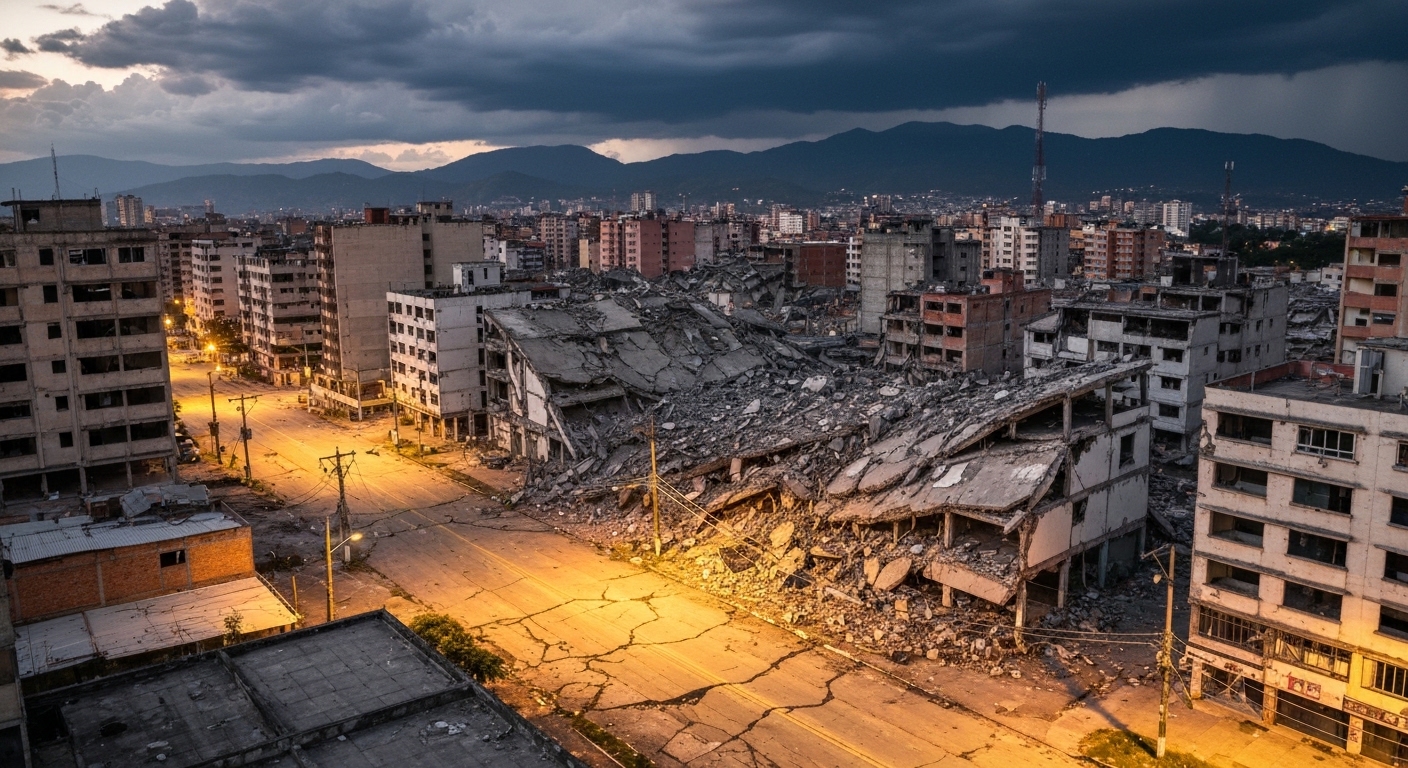
Venezuela sits on one of the Caribbean's most active seismic zones, but a major earthquake today wouldn't just be a natural disaster — it would be a catastrophe compounded by years of medical shortages, crumbling infrastructure, and mass emigration of critical professionals. The geology hasn't changed. The buildings, institutions, and emergency systems that are supposed to absorb that geological reality? They've deteriorated dramatically. As detailed in Venezuela's Double Crisis: Earthquakes Meet Economic Collapse, the convergence of natural and man-made disasters creates unprecedented risk. Venezuela earthquake preparedness isn't a technical question anymore. It's a humanitarian one.
Venezuela earthquake preparedness has become one of the most critical yet overlooked issues facing the nation. With deteriorating infrastructure, compromised building codes, and depleted emergency response capacity, the country's ability to respond to seismic events has eroded significantly over the past decade.
Why Venezuela Faces Exceptional Earthquake Risk
Position on the Caribbean Plate Boundary
Venezuela's seismic vulnerability starts with basic geology. The country straddles the boundary between the Caribbean Plate and the South American Plate — two massive tectonic bodies that have been grinding against each other for millions of years. This interaction produces a seismically active zone that runs roughly east-west across northern Venezuela, passing directly beneath some of the countr 's most densely populated cities.
Caracas, the capital, sits in a valley carved partly by tectonic forces. So does Valencia, Venezuela's industrial heartland. Barquisimeto, Mérida, Cumaná — the list of major cities exposed to significant seismic risk reads like a roster of the country's economic and population centers. This isn't a peripheral problem affecting remote communities. A major earthquake in northern Venezuela would hit the urban core of a country of roughly 28 million people, which is why Venezuela earthquake preparedness remains essential to protecting these vulnerable population centers.
The Major Fault Lines
The two fault systems most geologists focus on when assessing Venezuela seismic activity are the El Pilar Fault and the Boconó Fault. The El Pilar Fault runs along Venezuela's northeastern coast — it's a right-lateral strike-slip fault capable of generating earthquakes in the magnitude 7.0 to 7.5 range based on historical behavior. The Boconó Fault cuts through the Andes mountain range in western Venezuela and has produced some of the country's most destructive historical quakes.
Both faults are considered capable of producing what seismologists call a "characteristic earthquake" — meaning they can rupture along their full length in a single event, releasing enormous energy. The San Andreas Fault in California operates on similar mechanics. California has spent decades and billions of do