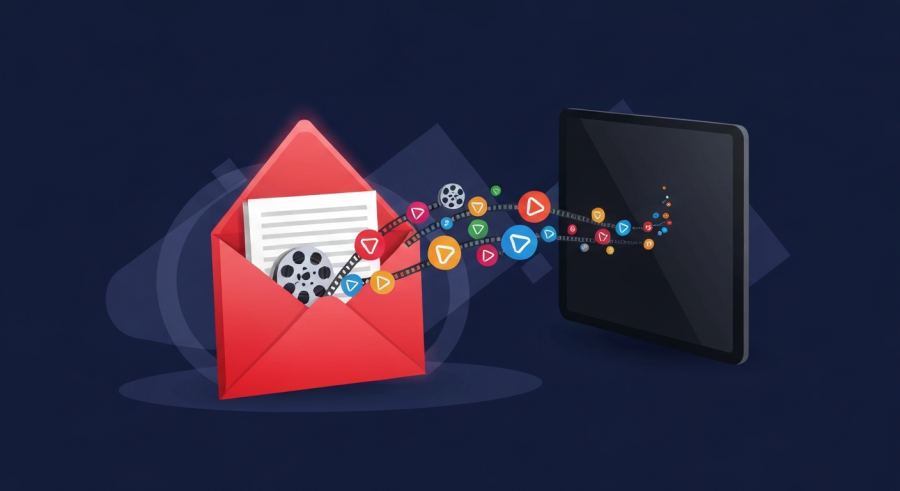
What is Netflix and how does it work? Netflix is a subscription-based video streaming service. You pay a monthly fee, pick a show or film from its library, and it plays instantly over the internet — no downloads, no discs, no late fees. It adjusts video quality automatically based on your connection speed, and you can watch on almost any screen you own.
Netflix is one of those things that somehow became both a verb and a cultural institution without anyone really stopping to ask how it actually works. You press play. Something good appears. That feels like enough. But there's a genuinely interesting machine underneath that play button — and understanding it helps you use Netflix better, dodge the frustrating bits, and decide whether you're actually getting value for money. So let's pull back the curtain. (No spoilers, I promise.)
Netflix Started as a DVD Company — and That Matters
Netflix launched in 1997. Reed Hastings and Marc Randolph started it as a postal DVD rental service in the US. You'd pick films online, they'd mail you the discs, you'd watch them, send them back. No late fees. That was basically their whole pitch against Blockbuster, and it worked.
By 2007, internet speeds had improved enough for streaming to become viable. Netflix made the pivot and never looked back. Blockbuster, famously, had the chance to buy Netflix for $50 million in 2000 and passed. (There's a joke in there somewhere about rewinding your career choices.)
Why does the history matter? Because it explains Netflix's DNA. The company was built around removing friction — no trips to the shop, no late return penalties, no fuss. Streaming is just the logical endpoint of that same idea. Press play. It works. Done.
By the early 2010s, Netflix had moved into making its own content. House of Cards in 2013 was the turning point. Since then, Netflix Originals have won Oscars, BAFTAs, and enough Emmys to fill a small warehouse.
How Netflix Actually Streams Video to Your Screen
This is where it gets genuinely clever. Streaming video is not magic — it's just very fast file delivery dressed up nicely.
When you hit play on Netflix, you're not downloading the whole film first. The video arrives in small chunks, a few seconds at a time, continuously. Think of it like a hosepipe filling a bucket — you can start using the water before the bucket is full.
The clever part is adaptive bitrate streaming. Netflix monitors your internet connection constantly. If your speed is strong, it delivers high-quality video. If it dips — someone else starts a video call, the neighbours all get home at once — Netflix quietly lowers the quality for a moment to keep playback smooth. You might notice a brief soft focus. Then it bounces back. No buffering wheel of doom, ideally.
Netflix also pre-fetches content. It loads a buffer of upcoming video ahead of your current position, so there's always something ready to play even if the connection hiccups briefly. Smart. Almost annoyingly so.
On the device side, Netflix works through apps on smart TVs, phones, tablets, laptops, games consoles, and streaming sticks like a Roku or Amazon Fire Stick. Pretty much any screen with an internet connection can run it.
What You Get with a Netflix Subscription
Netflix offers tiered plans. The specifics shift by country and over time, but the structure is broadly the same everywhere.
The cheapest tier includes ads and caps the stream quality. The middle tier is ad-free and covers standard HD. The premium tier adds 4K Ultra HD, Dolby Atmos audio where available, and lets more people watch at the same time on different devices.
Most plans allow two simultaneous streams. Premium bumps that to four. Netflix cracked down on password sharing properly in 2023 — so the days of your entire extended family and two ex-flatmates running off one account are largely over. (A moment of silence.)
What's in the library? Tens of thousands of hours of content, though the exact catalogue varies by region due to licensing agreements. Netflix Originals appear on every version of the platform everywhere. Licensed content — older films, shows from other studios — can appear or disappear depending on deals.
You can download content for offline viewing on mobile devices. Not everything is downloadable, but most Originals are. Useful for planes, trains, and anywhere your signal goes to die.
How Netflix Knows What You Want to Watch Before You Do
Nine times out of ten, the thing Netflix suggests next is something you'd have picked yourself given ten more minutes of scrolling. That's not coincidence.
Netflix's recommendation algorithm is one of the most refined in the industry. It tracks what you watch, how much of it you watch, what time of day you watch it, where you stop, and what people with similar taste patterns have enjoyed. It cross-references all of that constantly.
Then there's the thumbnail game. Netflix famously runs A/B tests on cover images. The same show might display a dramatic close-up for one viewer and a comedic still for another, depending on what that viewer has clicked on in the past. You and a friend could both see Stranger Things on your home screen and be looking at completely different images. Not creepy at all (it is a little creepy).
The algorithm is also why your profiles matter. If you share an account with family, keeping separate profiles stops your film recommendations getting contaminated by someone else's reality TV habits. Rule of thumb: always use your own profile. Your recommendations will thank you.
The Edge Detail Most Explainers Skip: Netflix Has Its Own Servers in Your Internet Provider's Building
Here's the bit that usually gets left out. Netflix operates something called Open Connect — its own content delivery network. Netflix has actually placed its own servers inside internet service provider buildings around the world.
When you stream a popular show, there's a decent chance the video data doesn't travel across the whole internet. It comes from a local Netflix server, often sitting physically close to you. This is why Netflix can be remarkably stable even during peak evening hours when internet traffic nationally is hammering everything else.
It also means Netflix has significant negotiating power with ISPs. The company has spent years building this infrastructure specifically to control the quality of its own delivery. Most streaming services rely entirely on third-party content delivery networks. Netflix built its own. That's not a small thing — it's a large reason why "Netflix quality" has become the benchmark people compare everything else against.
Is Netflix Actually Worth It? An Honest Take
Here's my strong opinion: Netflix is worth it if you watch it regularly, and not worth it if you're keeping it for one show a year.
The maths is simple. If you watch ten hours a month on a mid-tier plan, you're paying roughly the same as one cinema ticket for ten hours of content. That's a fair deal by any measure. If you're logging in every three months to watch one series and forgetting about it in between, you're basically donating money to Reed Hastings's boat fund.
Where Netflix genuinely earns its money is original content. Stranger Things, Squid Game, Beef, The Bear (technically Hulu but stay with me on the vibe), Ozark, The Crown — the originals catalogue is deep and often excellent. That's the actual product. The licensed library is a bonus, but it can disappear at any time and you can't plan around it.
Where I'd tell you not to bother: if you mostly want new cinema releases. Netflix is not the place for that. Films tend to arrive months after their theatrical run, sometimes more than a year later. If current blockbusters are your thing, Netflix will frustrate you. You'd be better served by a cinema subscription or checking what's on other platforms first.
The ad-supported tier is worth considering if you're price-sensitive. The ads aren't as heavy as traditional TV, and the content access is nearly identical. If you can tolerate four minutes of ads per hour, you save real money monthly. Most people I reckon would be fine with it after a week of adjustment.
One honest caveat: the library has thinned compared to Netflix's peak mid-2010s era, as studios launched their own streaming services and pulled their content. You're getting less licensed content than you used to. The original content has stepped up to compensate, but if you remember when Netflix had every Friends episode available, those days are gone and they're not coming back.
The Short Version
Netflix is a monthly subscription streaming service that delivers video over the internet, adjusts quality automatically to your connection speed, recommends content based on your viewing habits, and makes a huge chunk of its own shows and films. It started with DVDs in 1997, pivoted to streaming in 2007, and has been quietly running the entertainment industry's anxiety levels ever since. Whether it's worth your money depends entirely on how much you actually use it — but if you're watching regularly, it's hard to argue with the value. Now stop reading and go watch something. You've earned it.