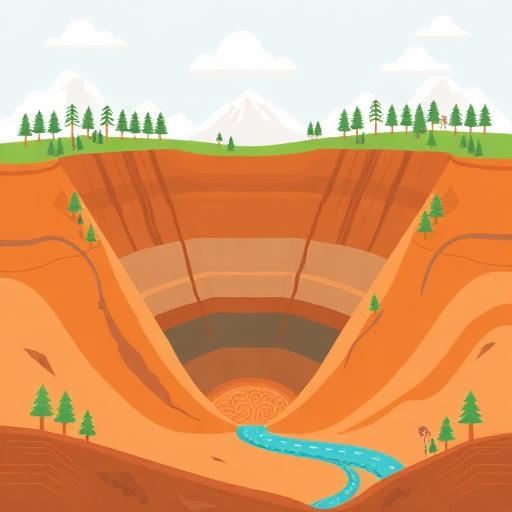
Understanding Deep-Seated Landslide Meaning
Deep-Seated Landslide Meaning Explained Simply
🔍 What is deep-seated landslide meaning?
Deep-seated landslide meaning involves landslides that originate deep within the earth, affecting stability and potentially causing significant damage.
⚙️ How deep-seated landslide meaning Works
These landslides occur when there is a failure deep underground, leading to the movement of large masses of rock and soil along a sliding plane.
🌍 Why deep-seated landslide meaning Matters
Understanding deep-seated landslides is crucial for assessing and mitigating the risks associated with them, especially in areas prone to such events.
🧠 Real-World Example
An example of deep-seated landslide meaning is the Vajont Dam disaster in Italy in 1963, where a massive landslide caused a devastating flood.
💡 Fun Fact or Analogy
Think of deep-seated landslides like a hidden danger lurking beneath the surface, waiting to unleash its power unexpectedly.
🤔 What You Might Want to Learn Next
How are deep-seated landslides different from other types of landslides? What are the warning signs of a potential deep-seated landslide? How can technology help predict and prevent deep-seated landslides? Are there any famous deep-seated landslide incidents in recent history? What measures can be taken to reduce the impact of deep-seated landslides?
Frequently Asked Questions
Deep-seated landslides originate deep within the earth, impacting stability.
These landslides occur due to underground failures, moving rock and soil along a sliding plane.
Understanding helps assess and mitigate risks in landslide-prone areas.
The Vajont Dam disaster in Italy in 1963 is a notable deep-seated landslide incident.
They are like hidden dangers waiting to unleash their power unexpectedly.